

Joyce Mmereole Okoli
The Nigerian Shippers’ Council (NSC) has renewed calls for the drastic review or outright removal of the war risk insurance surcharge imposed on vessels calling at Nigerian ports, insisting the levy is unjustifiable given the country’s improved maritime security.
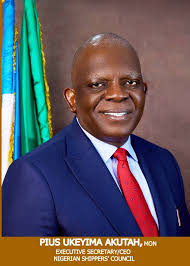
Speaking at the 3rd MARAN Annual Maritime Lecture (MAMAL 2025) in Lagos, the Executive Secretary of NSC, Dr. Pius Akutah, assured shippers of the Council’s unwavering commitment to protecting their interests as the nation’s port economic regulator.
Represented by Mrs. Margaret Ogbonna, Director of Regulatory Affairs, Akutah stressed that Nigeria’s waters have witnessed significant progress in security, thanks to the joint efforts of NIMASA, the Nigerian Navy, and other agencies through projects like the Deep Blue initiative.
“Despite the remarkable strides we’ve recorded in curbing piracy and armed robbery at sea, Nigeria is still unfairly classified as a high-risk shipping zone.
“This has forced importers and exporters to pay billions in unnecessary premiums costs that are ultimately passed on to ordinary Nigerians through higher prices of goods,” Akutah lamented.
Industry leaders echoed his sentiments. Chairman of the occasion, Engr. Greg Ogbeifun, urged stakeholders to move beyond “talkshops” and establish a concrete platform for measurable achievements, while former NIMASA DG, Capt. Temisan Omatseye, decried what he called unfair charges by foreign insurers compared to countries with worse insecurity.
NIMASA’s DG, Dr. Dayo Mobereola, represented by Mr. Victor Iloh, pointed out that Nigeria has not recorded a piracy incident in four years and has been delisted from global piracy-prone zones, yet importers have paid over $5 billion in war risk premiums in just three years.
Minister of Marine and Blue Economy, Adegboyega Oyetola, represented by Dr. Bolaji Akinola, outlined a three-pronged solution: sustained diplomatic engagement with global insurers, empowering Nigerian shipowners through single-digit financing under the Cabotage Vessels Financing Fund (CVFF), and reviving a national carrier driven by private-sector partnership.