

Joyce Mmereole Okoli
Nigeria’s journey toward a modern and efficient transport system depends on how quickly it integrates all modes of transportation road, rail, air, and waterways into a single, coordinated network, experts have said.
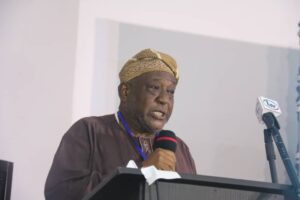
Speaking at the 2025 Nigeria Transport Infrastructure Summit held at Providence Hotel, Ikeja, Lagos, the Chair of the Lagos State Government Professorial Chair Endowment on Transport Studies, Professor Bamidele Badejo, declared that “multimodal integration is the nation’s most viable route to inclusive growth, job creation, and sustainable urban development.”
Delivering a keynote titled “The Future of Transportation in Nigeria: Trends, Challenges, Opportunities and the Way Forward,” Badejo described Nigeria’s transport reality as “a paradox a nation of vast opportunity trapped by poor planning and weak infrastructure.”
“Transportation is life, nurtures life, and keeps life going. Without it, everything becomes stunted and deficient in reaching its full potential,” he said.
Badejo warned that Nigeria’s overdependence on roads which carry more than 90% of passengers and freight has become economically and environmentally unsustainable, leading to crumbling infrastructure, endless gridlocks, and inflated logistics costs.
He urged both federal and state governments to move from road-centric planning to multimodal integration, linking all transport modes into an efficient, data-driven system capable of supporting trade and industry.
“Developing an integrated multimodal transportation system is crucial for Nigeria’s sustainable national development. It will improve efficiency, reduce costs, and promote environmental sustainability,” he said.
The don identified key bottlenecks holding back the sector from policy inconsistency and overlapping regulations to energy instability, indiscipline, and shortage of skilled professionals.
“Our industry is still dominated by those qualified by experience rather than by knowledge,” Badejo noted, urging stronger institutional collaboration and a national framework to guide long-term transport planning.
He highlighted emerging opportunities such as clean energy mobility, smart logistics, and port modernization, stressing that Nigeria could “leapfrog older technologies” just as it did with mobile communications.
“The future will not just happen; we must build it deliberately,” he concluded.

Summit convener and CEO of JustAlive Communications, Mrs. Pearl Ngwama, echoed Badejo’s call, urging government and private stakeholders to adopt an *“integrated transport masterplan” that transforms infrastructure into the “engine of national development.”
Citing Nigeria’s growing economic indicators, Ngwama noted that maritime trade hit ₦130.75 trillion in 2024, a 91% jump from 2023, while the aviation sector contributed ₦215.6 billion to GDP and rail transport recorded sharp increases in passenger and freight movement.
Despite this momentum, she warned that poor transport infrastructure continues to stifle productivity and drive youth migration.
“Our young people leave in search of better prospects abroad because we have not created enabling systems at home,” Ngwama said. “If we build world-class infrastructure that supports jobs and innovation, our talents will stay and thrive here.”
She linked the so-called Japa syndrome to weak infrastructure, arguing that sustainable transport innovation must focus not just on building new roads or rails but on creating adaptable systems powered by technology and green investment.
“Transport is the bloodstream of the economy. When it flows freely, the organs of the economy thrive; when it is weak, growth is stunted,” she stressed.
Ngwama expressed optimism that under the Renewed Hope Agenda, Nigeria could develop a resilient multimodal network connecting farms, factories, ports, and airports positioning the country as a logistics hub for West and Central Africa.
“Our ambition must be to move beyond quick fixes and stop-gap solutions. We must plan, finance, and execute systems built to last and evolve with technology,” she added.