

Joyce Mmereole Okoli
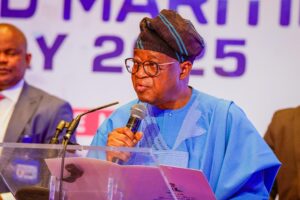
Nigeria’s maritime vision took global prominence on Thursday as the Minister of Marine and Blue Economy, Adegboyega Oyetola, declared the nation’s readiness to champion sustainable ocean governance at the 2025 World Maritime Day celebration in Lagos.
Delivering his keynote address at Eko Hotel and Suites, Victoria Island, before diplomats, industry leaders, and maritime stakeholders, Oyetola underscored the urgent need for collective ocean stewardship, describing the blue economy as both a responsibility and a frontier of opportunity.
“The ocean produces up to 80 per cent of the Earth’s oxygen, supports billions of livelihoods, and carries over 80 per cent of global trade,” Oyetola said. “Yet it faces mounting threats from pollution and overfishing to climate change. We must be stewards, not exploiters.”
Themed “Our Ocean, Our Obligation, Our Opportunity,” this year’s celebration echoed the International Maritime Organization’s call for global action to safeguard the seas while unlocking sustainable growth.
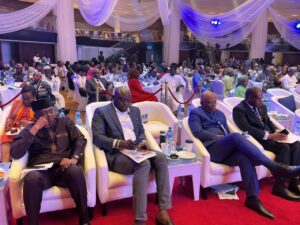
Oyetola highlighted Nigeria’s drive to modernize port infrastructure, enforce sustainable fishing practices, enhance maritime safety, and reduce oil dependence through renewable ocean energy, aquaculture, and marine biotechnology.
He further emphasized diplomacy as a tool for maritime progress, inviting stronger global cooperation in ocean governance. In a strategic move, the Minister announced Nigeria’s bid to return to Category C of the IMO Council, citing widespread support from member states.
“With re-election into the IMO Council, Nigeria will consolidate its role as a key voice in shaping global maritime policy,” Oyetola stated, linking the ambition to President Bola Ahmed Tinubu’s Renewed Hope Agenda.
The event ended with a resounding national pledge to protect the seas and secure opportunities for future generations.
“Our ocean is our shared legacy, Our obligation is to protect it. Our opportunity is to transform it,” Oyetola declared. “
The 2025 World Maritime Day celebration not only reinforced Nigeria’s global maritime ambition but also positioned the nation as a driving force for innovation, sustainability, and international collaboration.